How to Design the Perfect Home Theater Room: Projectors vs. TVs, Surround Sound, and Pro Tips for Greater Boston Homeowners
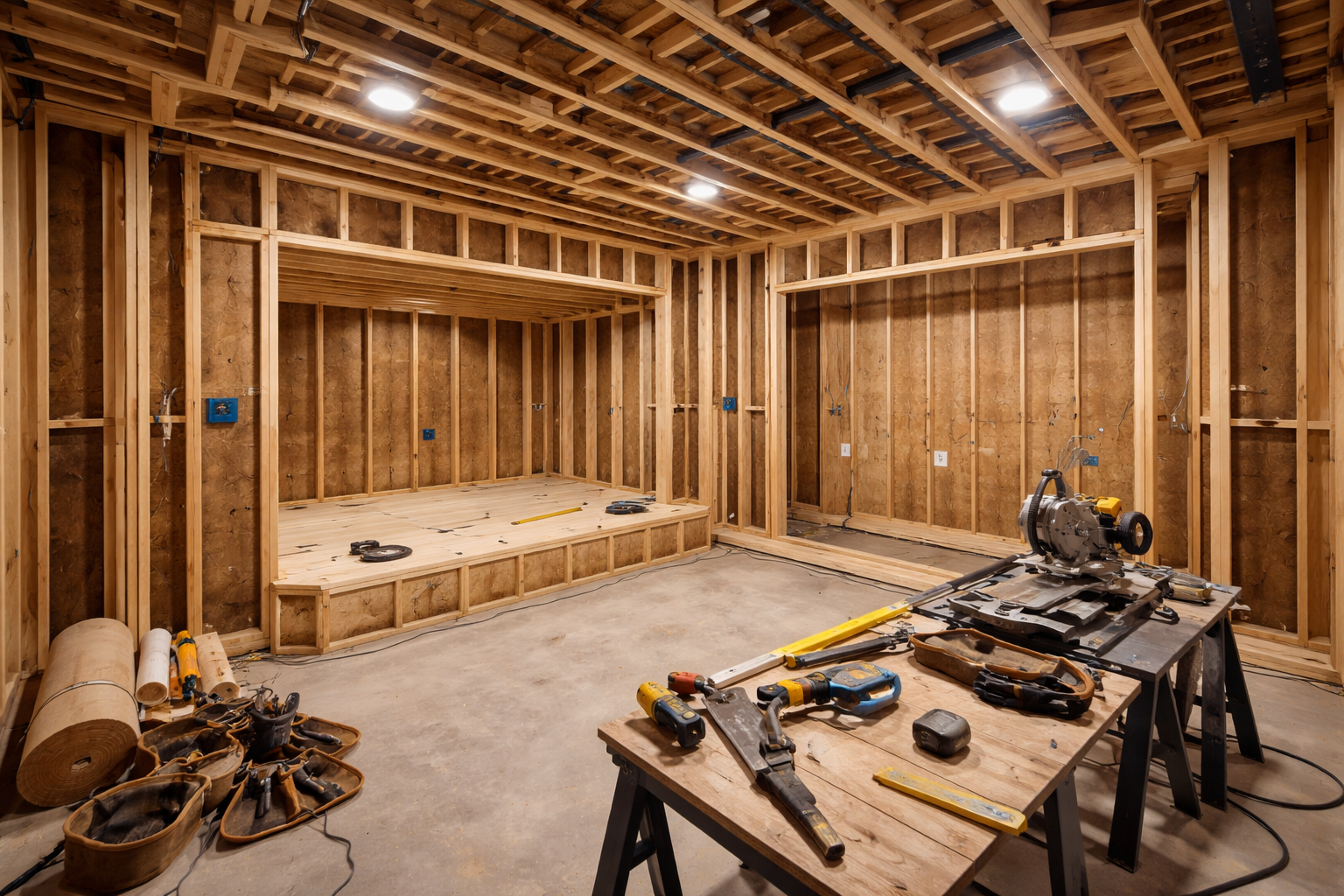
You've got the room. Maybe it's a finished basement, a spare bedroom, or that bonus space above the garage you've been meaning to do something with. You know you want a home theater setup — big screen, great sound, somewhere the whole family actually wants to gather. But when you start researching, the options multiply fast: projector or TV? Dolby Atmos or basic surround sound? Reclining seats or a sectional? It can feel overwhelming before you've even picked a screen size.
Here's the good news: a great home theater design doesn't have to be complicated or astronomically expensive. With the right decisions made in the right order, you can build a space that punches way above its price tag. Let's walk through the big choices.
Projector or TV: Which Is Right for Your Space?
This is usually the first question people ask, and the honest answer is: it depends on your room.
A large-format TV — think 85 to 100 inches — is hard to beat for ease of use and picture quality in rooms where you can't fully control the light. Modern OLED and mini-LED TVs deliver stunning contrast and color accuracy, and they work beautifully whether it's noon or midnight. If your theater space has windows or gets ambient light during the day, a TV is almost always the better choice.
Projectors shine (literally) when you can control the light. A darkened room with a 120-inch screen is a genuinely cinematic experience that no TV can replicate for anywhere near the same cost per inch. Today's laser projectors are brighter, sharper, and longer-lasting than older lamp-based models, and short-throw options let you place the projector just inches from the wall — no ceiling mount required. If you want that true movie-theater feel for your home theater setup in Greater Boston, a quality projector in a dedicated dark room is tough to beat.
Getting Surround Sound Right
A great picture with mediocre audio is like a great meal with a bad wine pairing — something's always slightly off. Sound design is where home theaters go from good to great, and it's also where most DIYers run into trouble.
For most rooms, a 5.1 or 7.1 surround sound system — meaning five or seven speakers plus a subwoofer — delivers excellent results. If your ceiling allows for in-ceiling speaker installation, a Dolby Atmos configuration adds overhead channels that create genuinely immersive, three-dimensional audio. The difference between standard surround and Atmos on the right content (action films, concert recordings) is not subtle.
Speaker placement matters enormously. Front left, center, and right channels should be positioned at ear level when seated. Surround speakers should sit slightly behind and above your seating position. And the subwoofer — which handles all that low-frequency bass — often benefits from some experimentation with placement to avoid room modes (spots where bass sounds boomy or thin). This is one area where professional calibration pays real dividends.
Seating, Layout, and Acoustic Treatment
The best display and audio system in the world won't save a room where the seating is wrong. As a general rule, for a 100-inch screen, your primary seating should be roughly 10 to 14 feet away. Too close and you'll feel like you're in the front row of a movie theater — fun occasionally, exhausting regularly. Too far and you lose the sense of immersion.
Acoustic treatment often gets skipped, especially on tighter budgets, but even modest improvements make a real difference. Bare walls and hard floors reflect sound in ways that muddy dialogue and smear surround effects. Strategically placed acoustic panels, rugs, and even heavy curtains absorb reflections and let your speakers do their jobs properly. For dedicated home theater rooms on the North Shore, we often recommend treating at least the side walls and the ceiling between the speakers and the primary seating row.
When to Call the Pros (and Why It's Worth It)
A home theater setup involves more interconnected decisions than almost any other room in the house — and the order of operations matters. Running speaker wire after drywall is up, for instance, is far more expensive and disruptive than running it during a rough-in phase. The same goes for conduit for HDMI and power.
Beyond the wiring, proper system calibration — using tools like Dirac Live or Audyssey to fine-tune speaker levels, delays, and EQ to your specific room — is something that takes professional equipment and experience to do well. We've walked into rooms where a $5,000 audio system sounded mediocre simply because it had never been calibrated. Fifteen minutes of proper setup transformed it.
If you're planning a home theater design from scratch, or retrofitting an existing space on the North Shore or anywhere in Greater Boston, getting a professional consultation early in the process saves money and headaches down the road.
Ready to get started? Call TV Install Pros at 781-399-7300 or visit tvinstallpros.com to schedule your free consultation.